|

| |
EURASION MILFOIL; TOO
"EXOTIC" FOR US
|
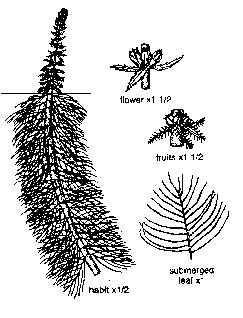
| Variable-leaf Milfoil and its
more aggressive cousin, Eurasion Milfoil, have been getting a lot of
publicity this year due to growing public awareness. The potential
threats posed by introductions of these exotic species as well as other
potentially nuisance plants, is certainly long overdue.
It started innocently enough. Jimmy’s mom brought a beautiful
aquarium plant called Eurasion Milfoil to decorate her son’s new fish
tank, not realizing that a nightmare was about to begin. The plant was
"exotic" in the sense that it wasn’t native to this country
but was native to Europe and Asia, being imported during the 1940’s.
It somehow escaped Jimmy’s fish-tank, crept down the stairs and began
to formulate plans to take over the water world.
|
 |
It began by infesting a few
small ponds, robbing the native plants of their sunlight with its
monstrous, feathery appendages. Then it spread to lakes and rivers,
destroying fragile ecosystems and threatening the survival of endangered
species.
People stopped swimming, boating and fishing because the water was
too disgusting, overrun with green, slimy weeds. Property values on the
lake shores decreased too. All across the country, lakes succumbed to
the wrath of the evil Eurasion Milfoil, even slipping past the
Border Patrol and infested Canada. The only place East of the
Continental divide where the lakes remained untouched was Maine. ( This
is the truth!)
|
| Personifying a weed is a
little crazy, and no one really knows how it moved from aquariums to
lakes. However, these invasive plants are much more threatening to our
Maine lakes than any comic strip villain. Worse yet, this weed cannot be
destroyed by any super hero or by any physical, chemical or biological
means. One small piece of just one plant can infest an entire lake.
The challenge is whether Maine and each lake association will pursue
the path of aggressive prevention or wait until we have a crisis. Every
day we live with the threat of potentially invasive plants entering the
State via international cargo vessels, planes, tourists, migratory birds
and other sources. These introductions pose a serious threat to our
health, economy and environment. Therefore, it’s in the best
interest of everyone to be well informed on how to prevent the
introduction and spread of undesirable invasives. |
| The Maine Legislature recently
enacted LD2581, "An Act to Prevent the Spread of Invasive Aquatic
Plants." The legislation identified eleven aquatic plants
considered to be invasive, including well publicized plants and milfoils.
It includes provisions for educational materials for the public on how
to identify and prevent the spread of aquatic plants. It prohibits the
transport of any aquatic plant, on the outside of a vehicle, trailer or
watercraft. Those found in violation will be fined up to $500. (Other
bills are currently before Legislature which would be far more
punitive.) It also addresses the topic of quarantine, closing boat
access or restricting/prohibiting watercraft in waters found to contain
an invasive specie. |
 |
| Report any
strange or unfamiliar plants to us or to The Maine Volunteer Monitoring
Program (Scott Williams) at 225-2070. For more information, go to the
Maine DEP Website, infodep@state.me.us.
(Credit for part of this column is given to In Our Backyard, a
weekly column of the Maine DEP.)
|
|